
Important Notice
If you are a doctor, dietitian, nurse, pharmacist, then click on I’m a healthcare professional to proceed. For persons other than Health care professionals, we request you to visit www.danone.in.

This clinical summary explains that human milk oligosaccharides (HMOs) reduce the occurrence of infant morbidities such as bronchitis and lower respiratory tract infections (LRTIs) and also reduces medication usage such as antibiotics and antipyretics.1
HMOs have varied structures, types, and concentrations in human milk.1 2′-fucosyllactose (2’-FL) is one of the most abundant HMO, with a concentration of 10-15 g/L in mature milk.1,2 HMOs are crucial in promoting and maintaining the growth of gut flora and strengthening the immune system.1 2’-FL is also known to support the growth of certain microbiome species.1
To assess the role of HMO such as 2’-FL in reducing the incidence of bronchitis, LRTIs, and lesser use of antibiotics and antipyretic medications.
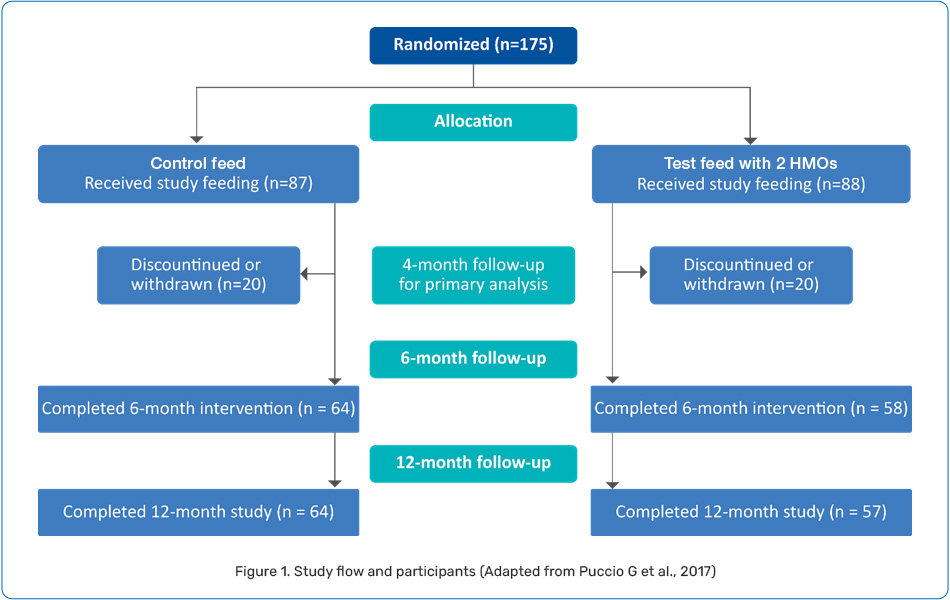
HMOs: Human milk oligosaccharides
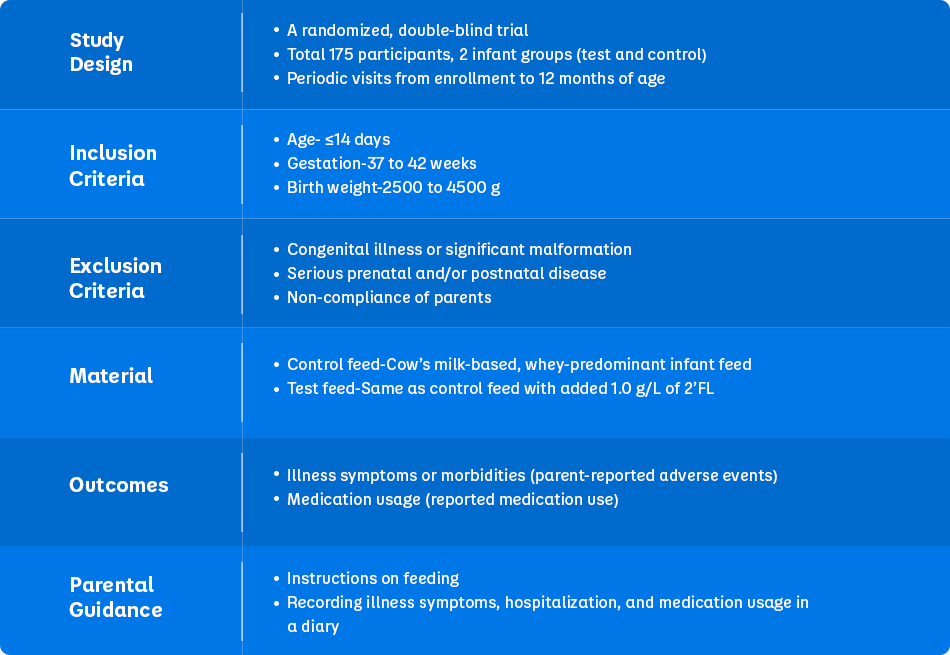
Table 1. Study description (Adapted from Puccio G et al., 2017)1
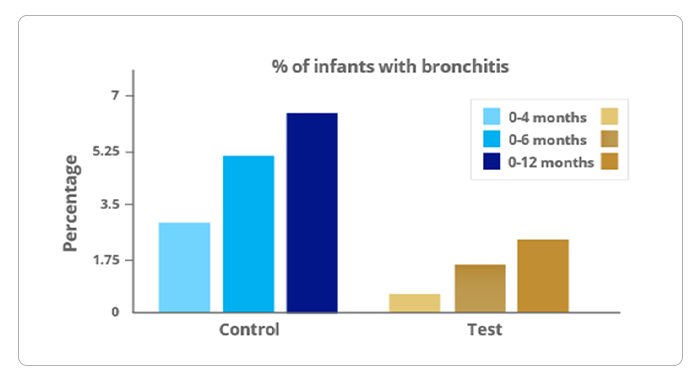
1.Bronchitis
Reduces the Risk of Bronchitis by 63%
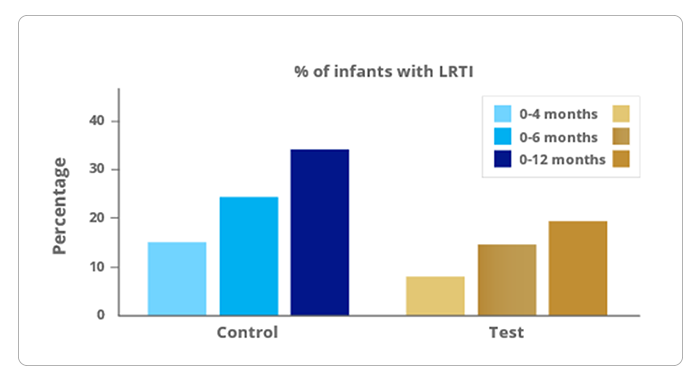
2.Lower respiratory tract infections(LRTI)
Lowers RTIs by 44%
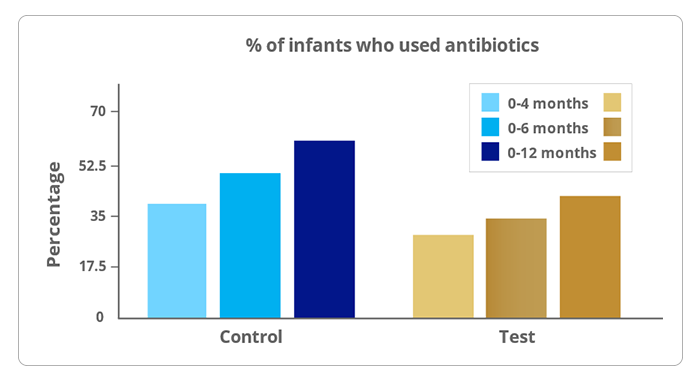
3.Antibiotic use
Reduces Antibiotic usage by 33%
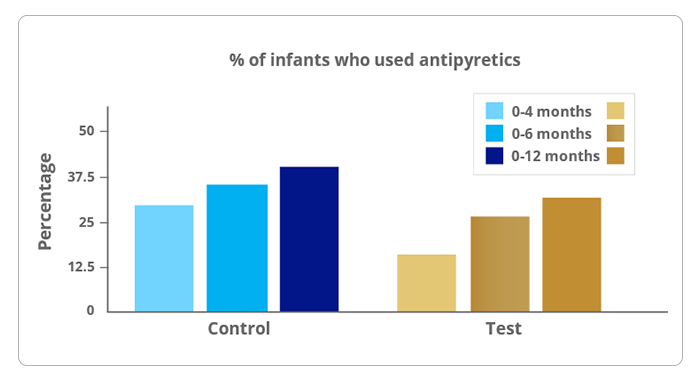
4.Antipyretic use
Reduces Antipyretic usage by 21%
HMOs are a vital component of human milk, contributing to the overall well-being of infants. This randomized trial showed that infant feeds with HMO (2’-FL) are safe and well-tolerated in infants. HMOs help in improving immunity and fighting infections. Infants fed on feeds with HMO such as 2’-FL show lesser incidence of infections such as bronchitis and LRTIs. These infants also need fewer antipyretics and antibiotics to combat morbidities.
CTA: Dear doctor, do you agree that feed containing 2′-FLs will boost immunity and reduce infection burden in infants?